How I Use Science Notebooks In My Middle School Classroom
I’m the type of teacher who can’t keep track of loose papers. I need a system that keeps all student work in one spot, so I never have to collect papers or return them. I’ve always joked that I’m allergic to binders (I hate opening and closing the rings!). So this is a guide to how I make them work in my 6th grade classroom, from the setup and daily routine all the way to how I grade them quickly without taking anything home.
Notebook Type
Each student needs a composition notebook with a hard cover (not plastic) and with 100 sheets (not 80!) for 200 total pages. We will fill almost the entire book, so they need all 100 sheets. This goes on the school supply list, but I try to have at least ten extras for students who can’t get one themselves (or if they show up with an 80-sheet one).
Notebook Storage
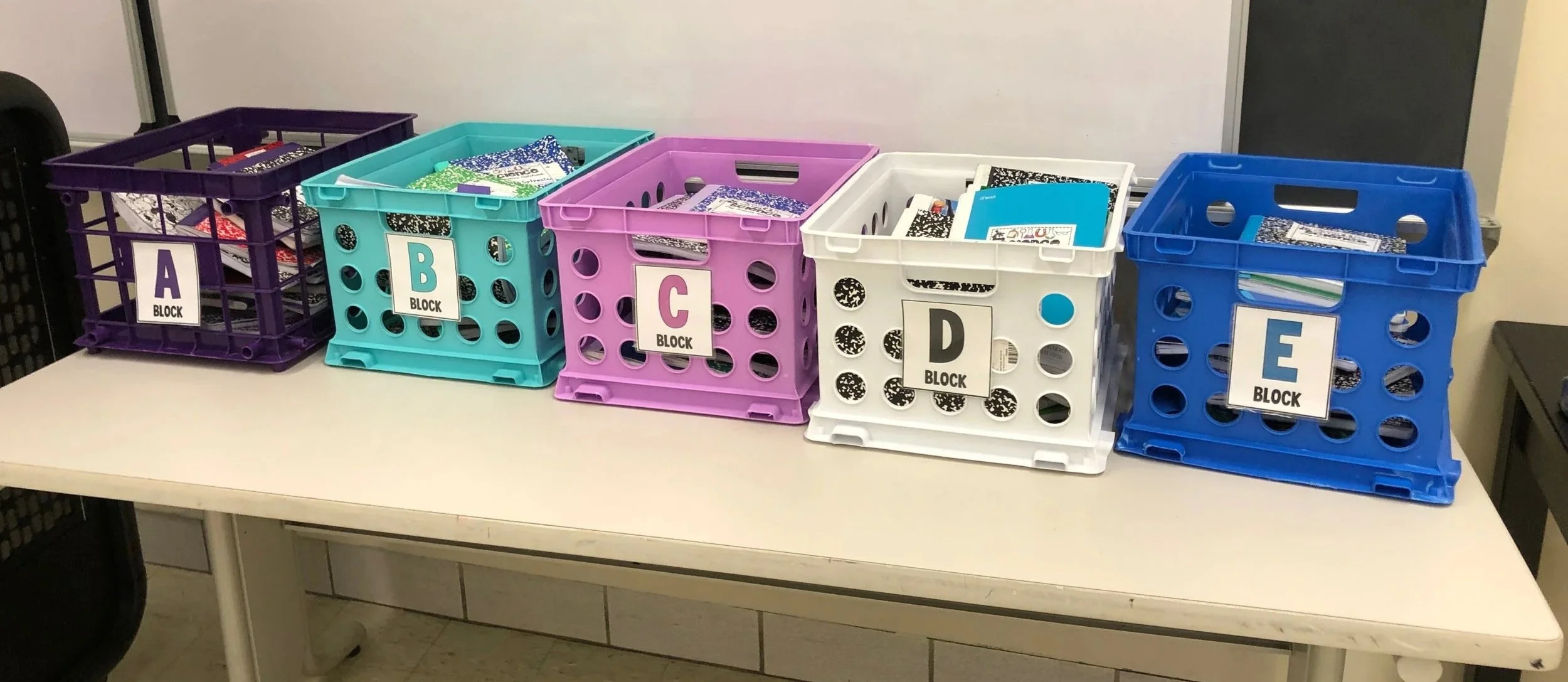
For years I had students keep their notebooks in the classroom in colorful bins sorted by block, but recently I’ve had students keep them in their backpacks. This cuts down on issues with students messing with each other’s notebooks.
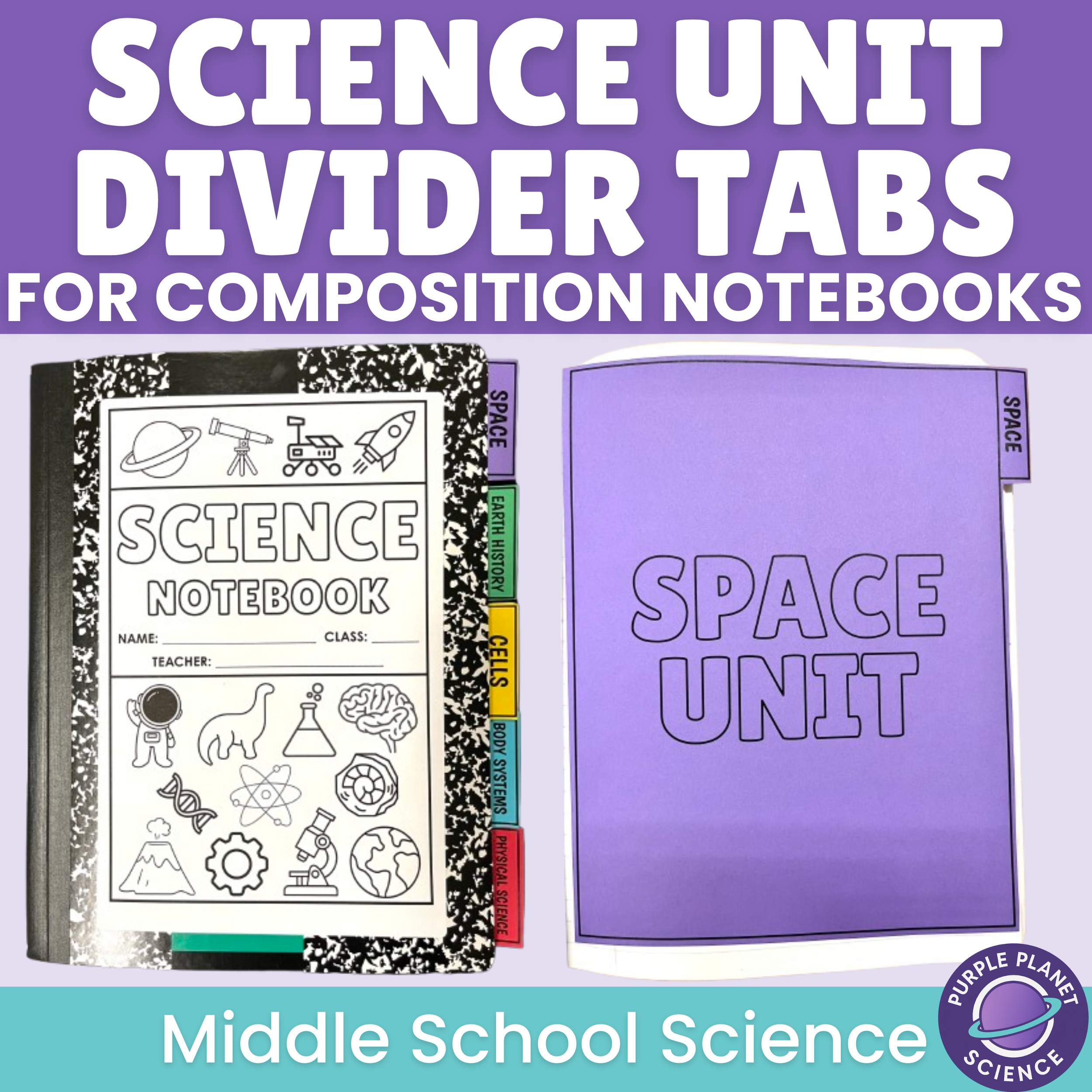
Front Cover Labels
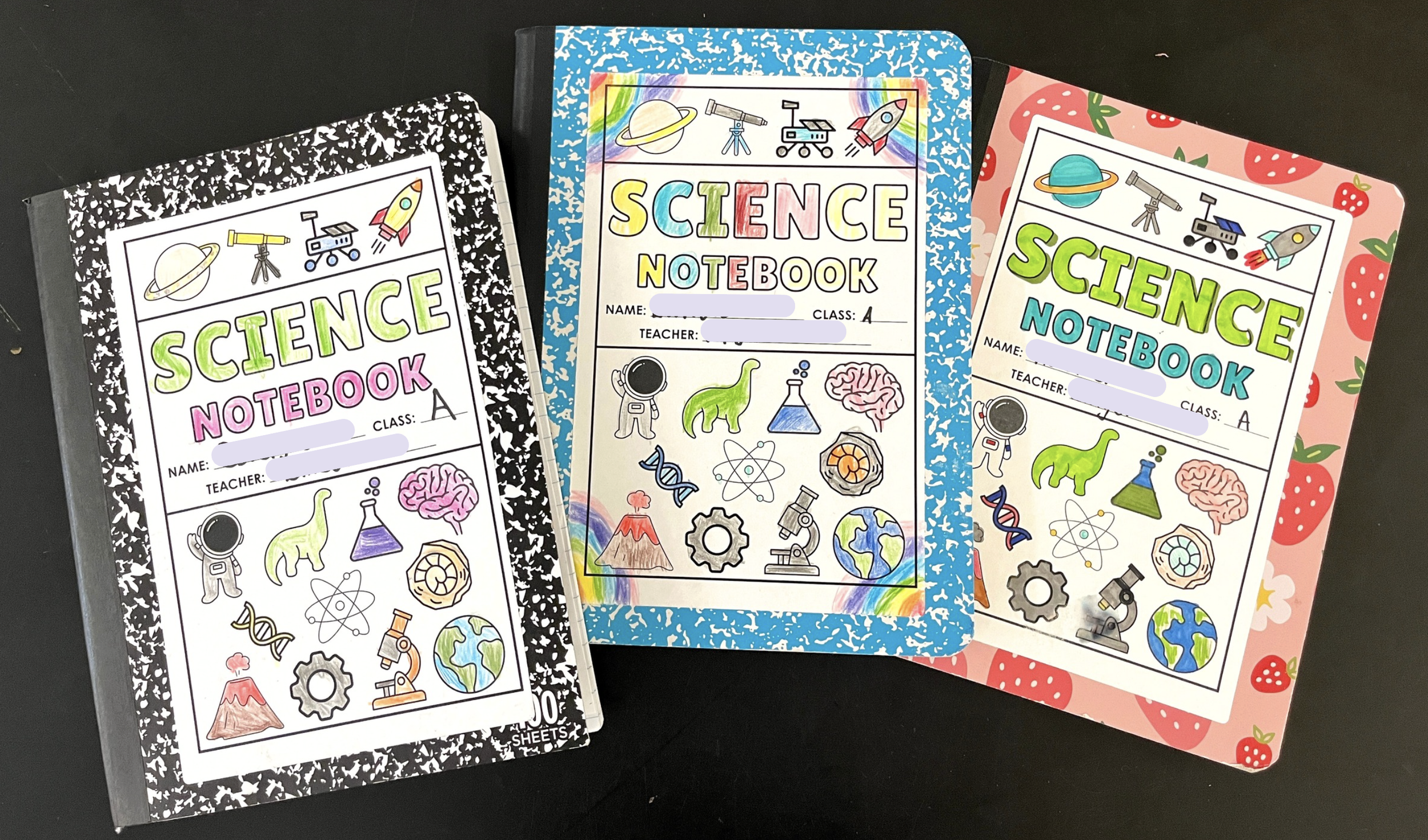
I used to tape on paper labels to the front notebook covers, but I recently started making labels that I can print on shipping label stickers - and they work so much better! Students can color and personalize them, and we don’t have to deal with tape peeling off throughout the year.
Internal Organization
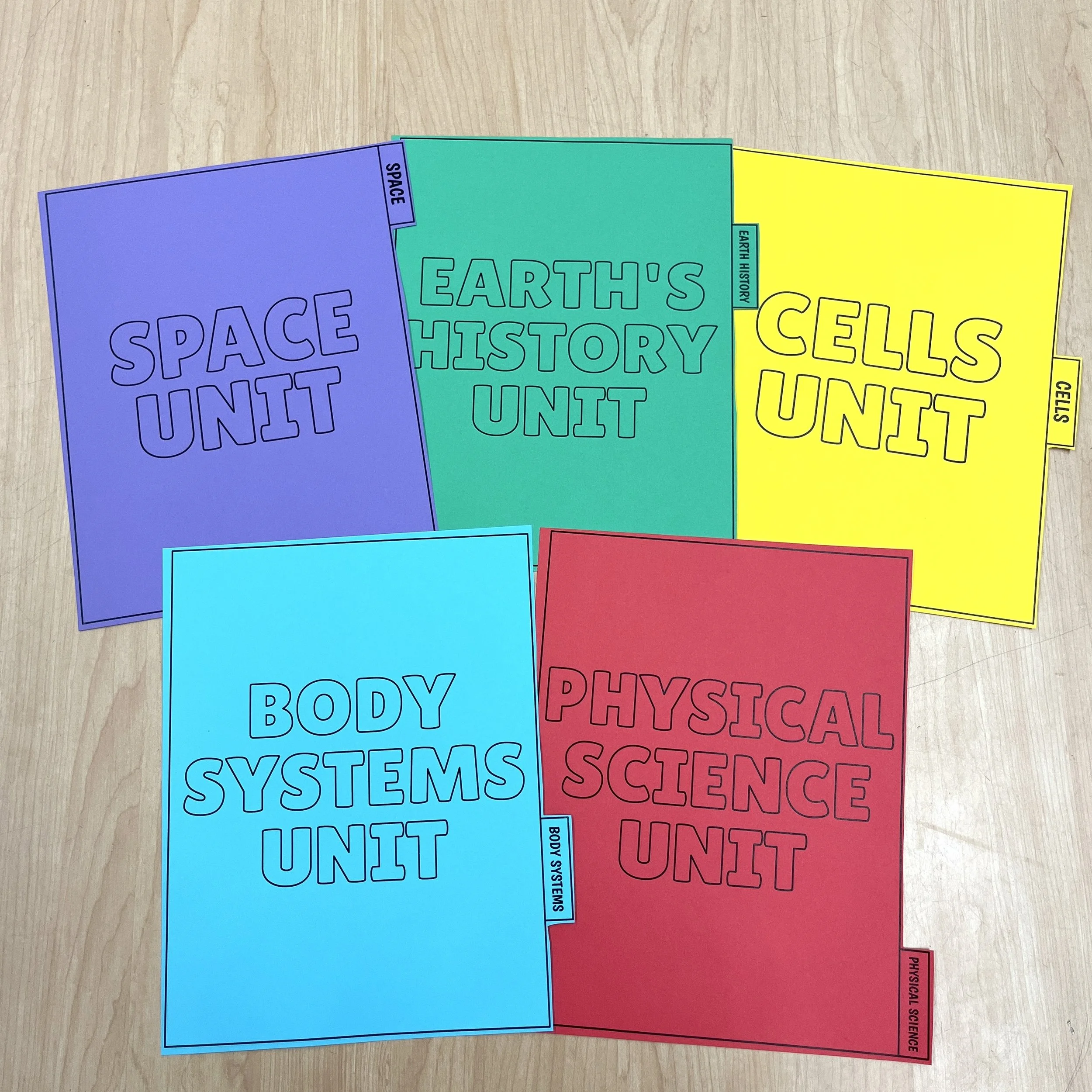
Some teachers love a Table of Contents, but it’s not for me. I just use Unit Divider Tabs printed on slightly thicker colored paper. You can put tape on the hanging tabs to keep them from ripping.
I have students number roughly 30ish pages at a time, at different points throughout the year (usually at the end of a unit). Occasionally kids end up messing something up, or skipping a page, and it’s easier to renumber a few pages than to re-number all of them. I prefer numbers on the bottom outer corners.
Glue Sticks
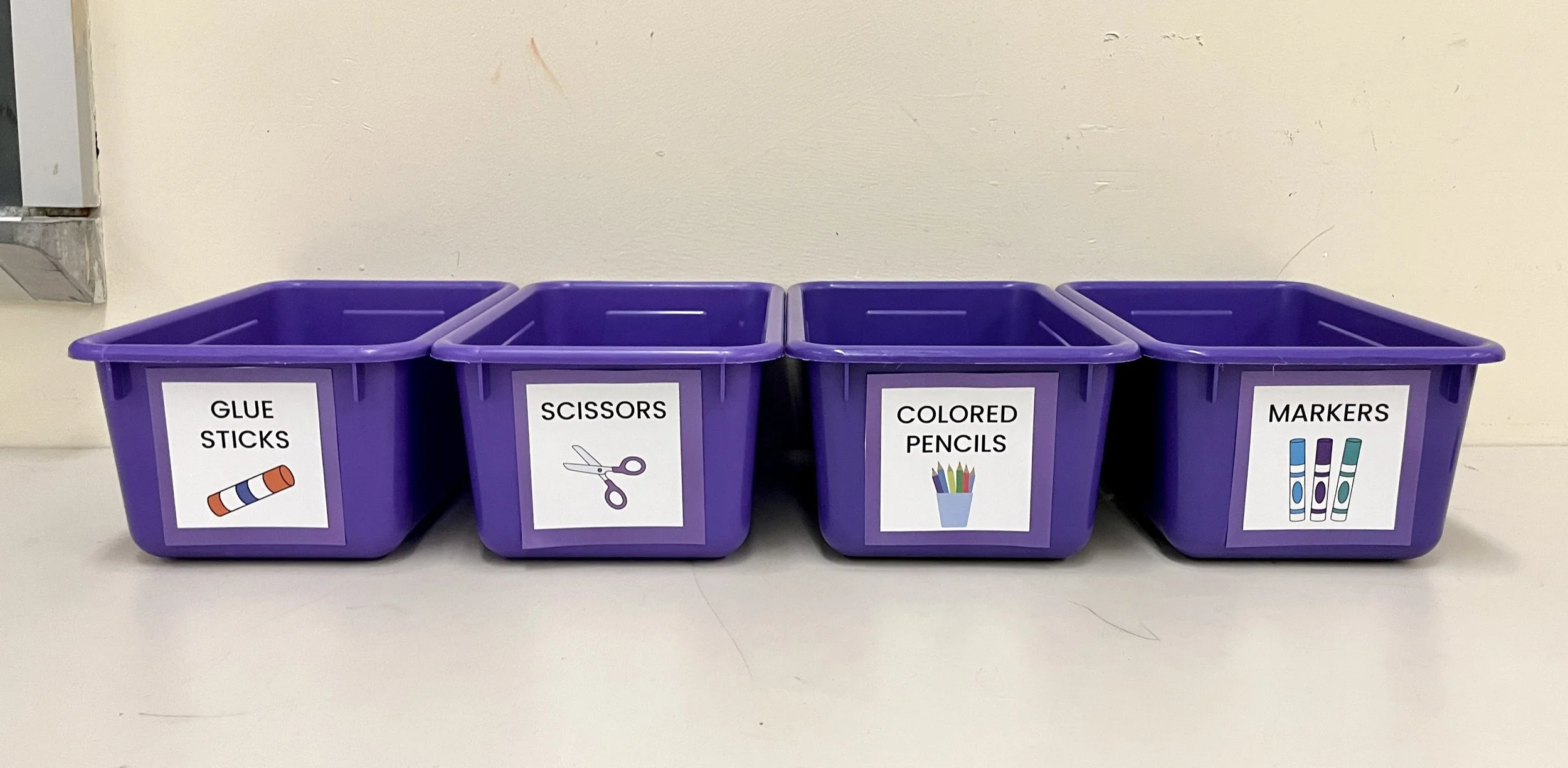
My school provides a lot of glue sticks, but not enough to last the year. On the school supply list, I put that each student needs a box of 30 glue sticks. But honestly, this year I’m going to suggest two boxes! I’ve heard of teachers who use double sided tape, and glue bottle dabbers – but glue sticks have always worked fine enough for me. I keep a bin of extra glue sticks in the back of my room.
Paper Prep
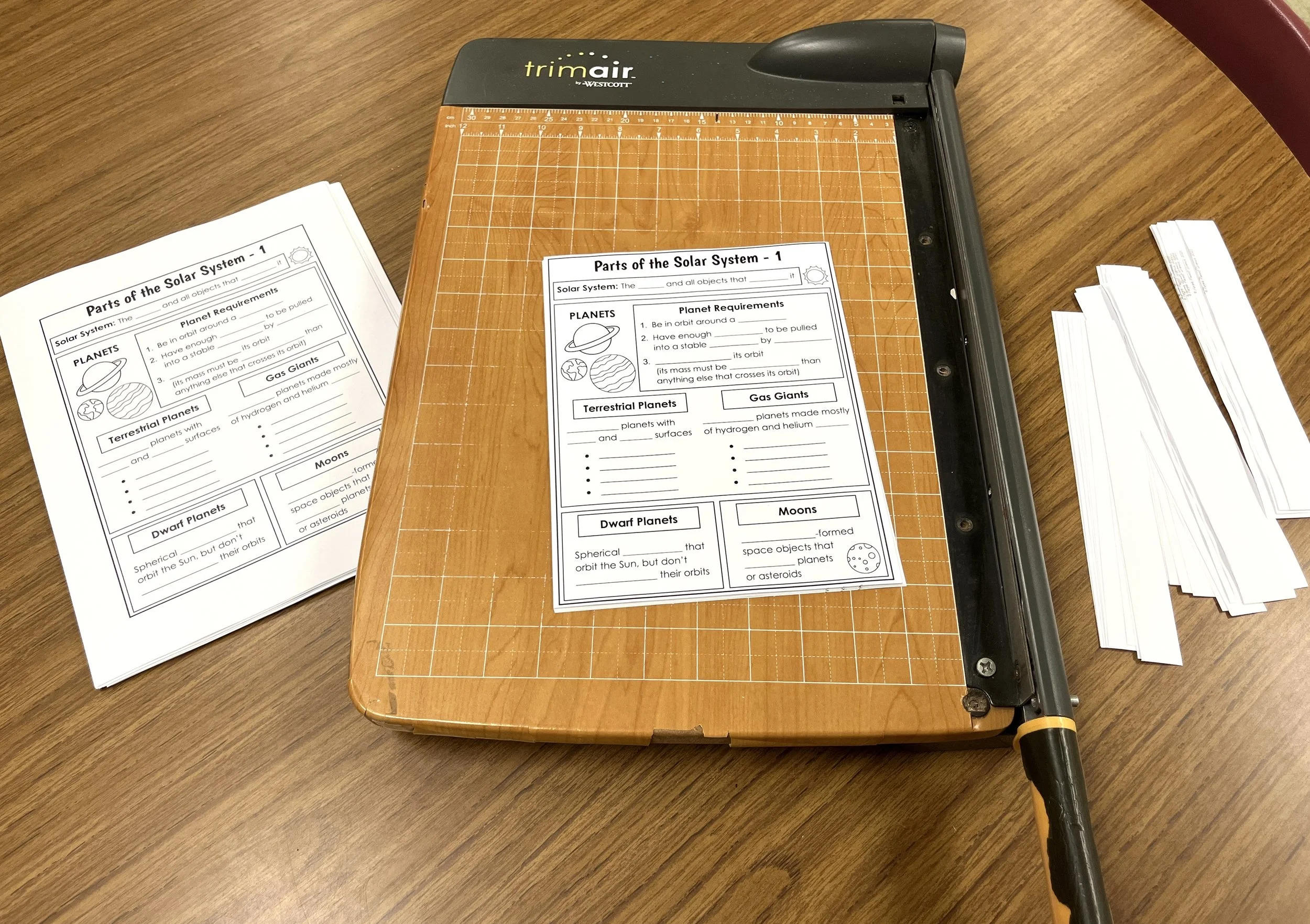
I print papers at 80-85%, and pre-cut them for the students using a large paper cutter. It’s more prep ahead of time for me, but I don’t have time to wait for students to cut papers out every day. It takes me about 5 minutes to chop a stack of 100 papers. This helps class start as quickly and efficiently as possible. I put the pile of the ready-to-go notebook pages on a big table on the side of my room, and students pick them up as they walk in.
Class Structure
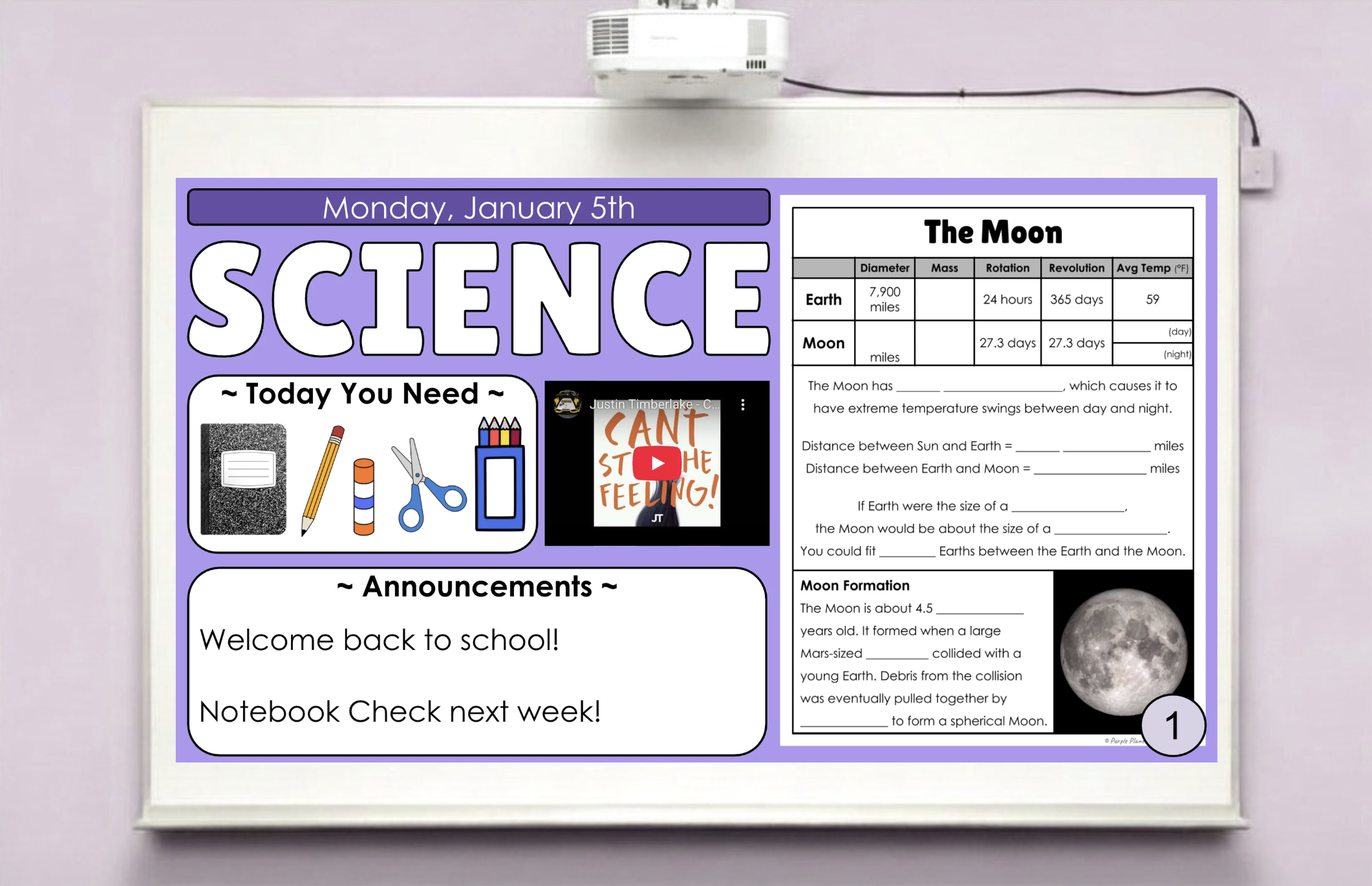
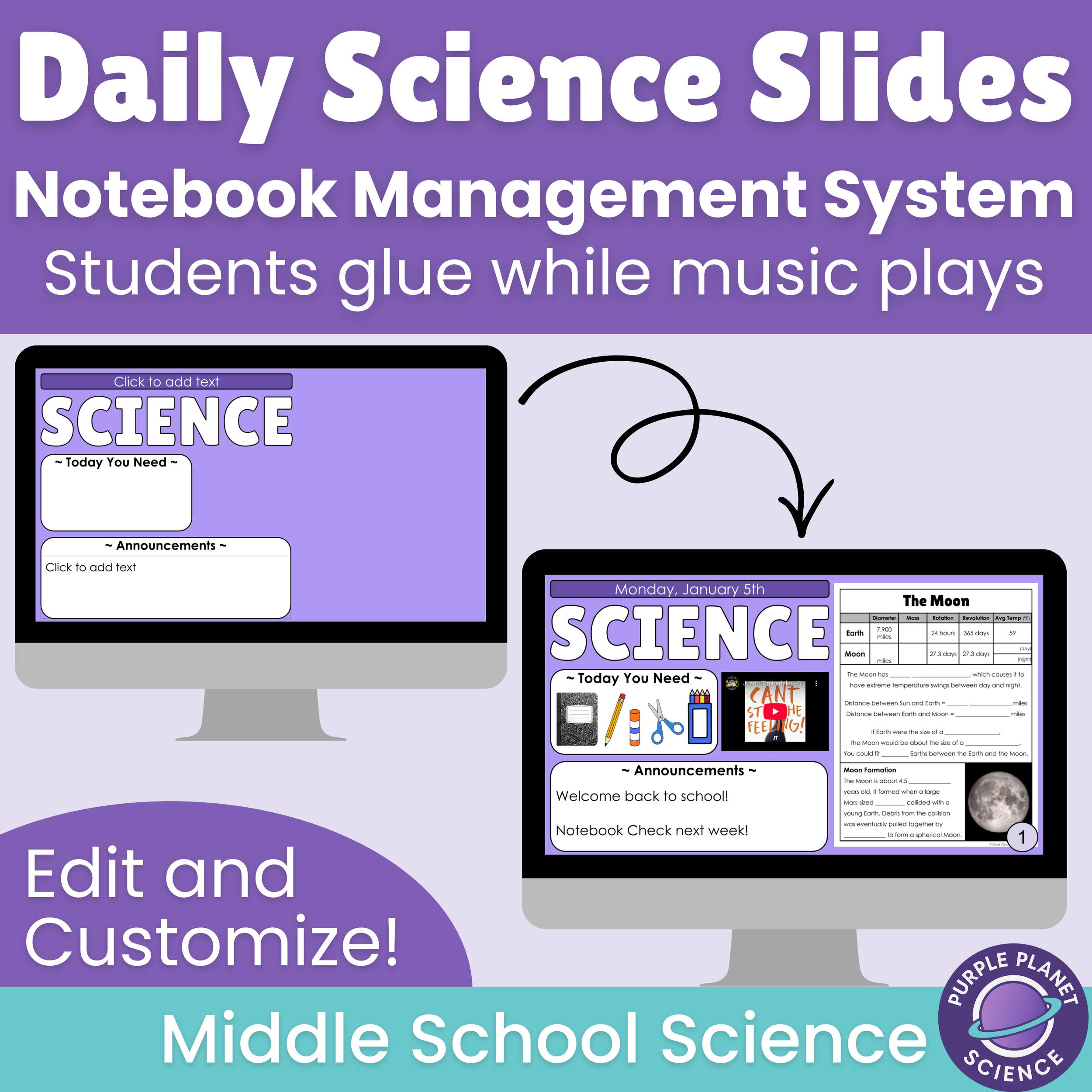
Class starts with a daily slide on the board, showing students how many notebook pages are being used that day, what they look like, and what order to put them in. On the side of the room, I have a table with the ready-to-go notebook pages. At the beginning of the year, we set the routine that students come in, grab one of each notebook page, look at the board to check the page numbers, and glue the papers into their notebook before the daily song finishes playing. Sometimes the songs are themed to the topic of the day. When the song is done, students should be in their seats with their notebooks ready to go.
Types of Notebook Pages
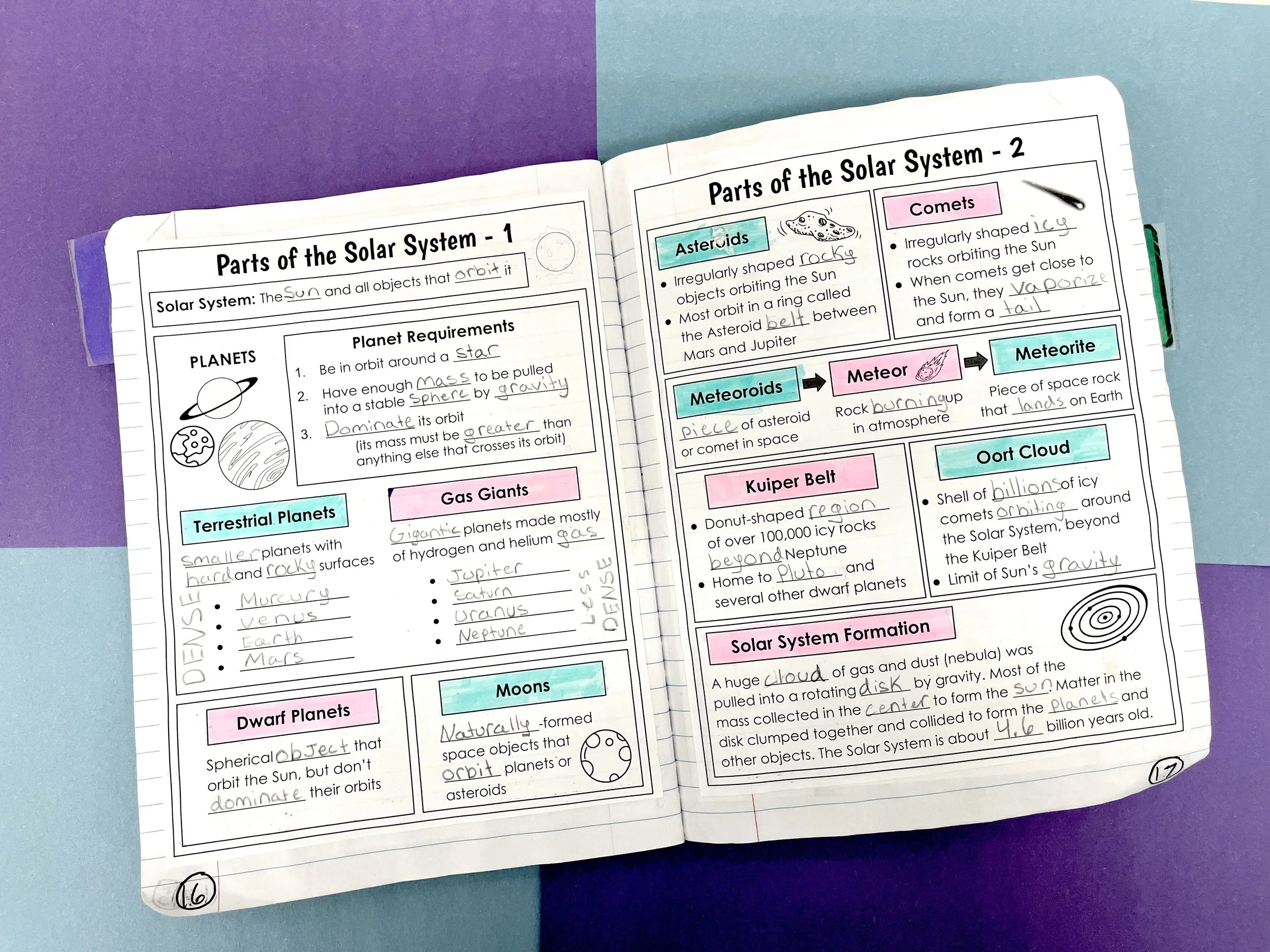
I use mostly scaffolded/guided notes with a few fill-in-the-blanks. Over the years, I’ve learned that students need lots of space to write, and they get overwhelmed with too much information on one page. I’ve simplified my note pages over the years to really focus on the key concepts – but still keep lots of extra info on my slides. I also have sheets to guide labs/activities, practice questions, task card recording sheets, reflection pages, etc… I rarely do any foldables anymore, because I find they take too much time.
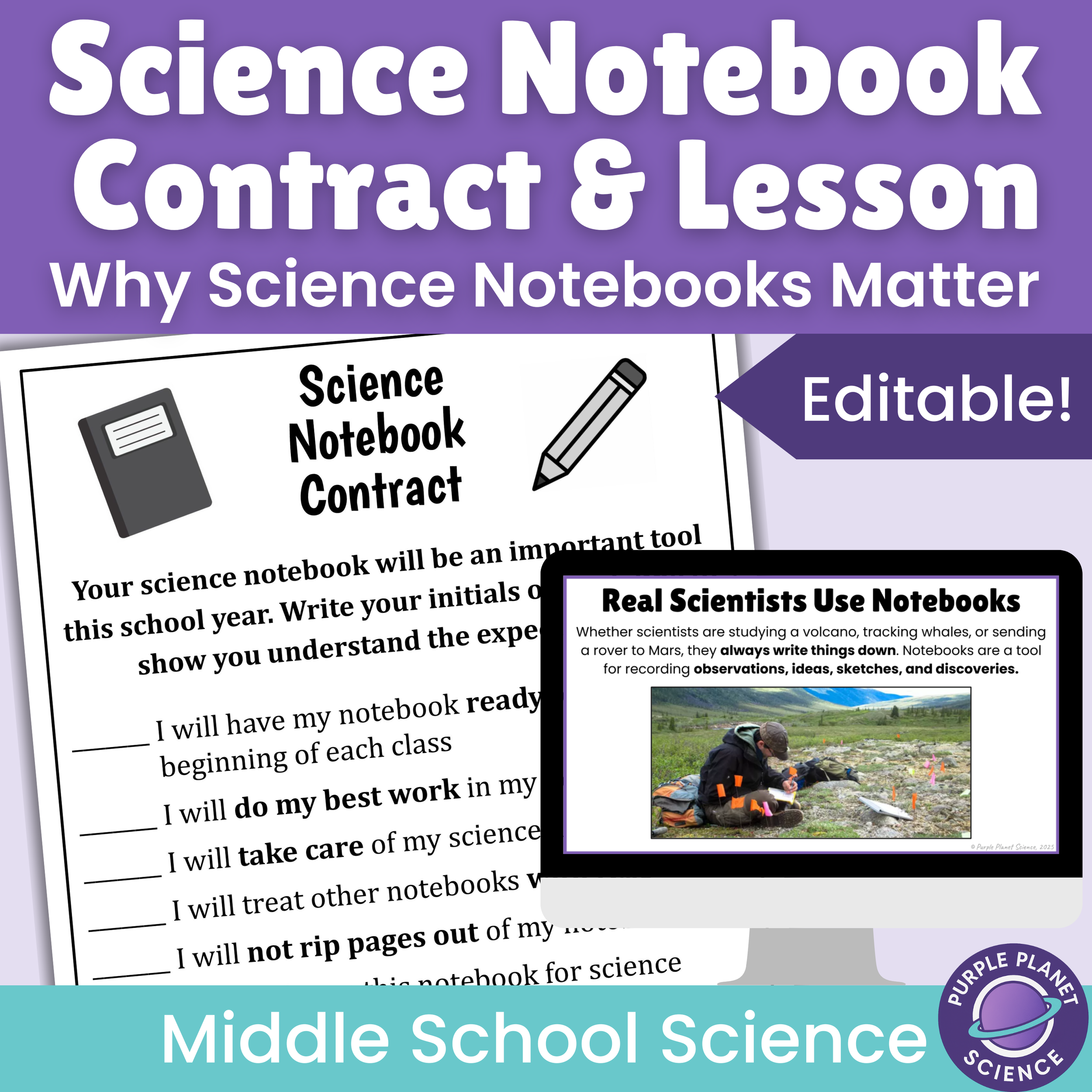
Notebook Contract
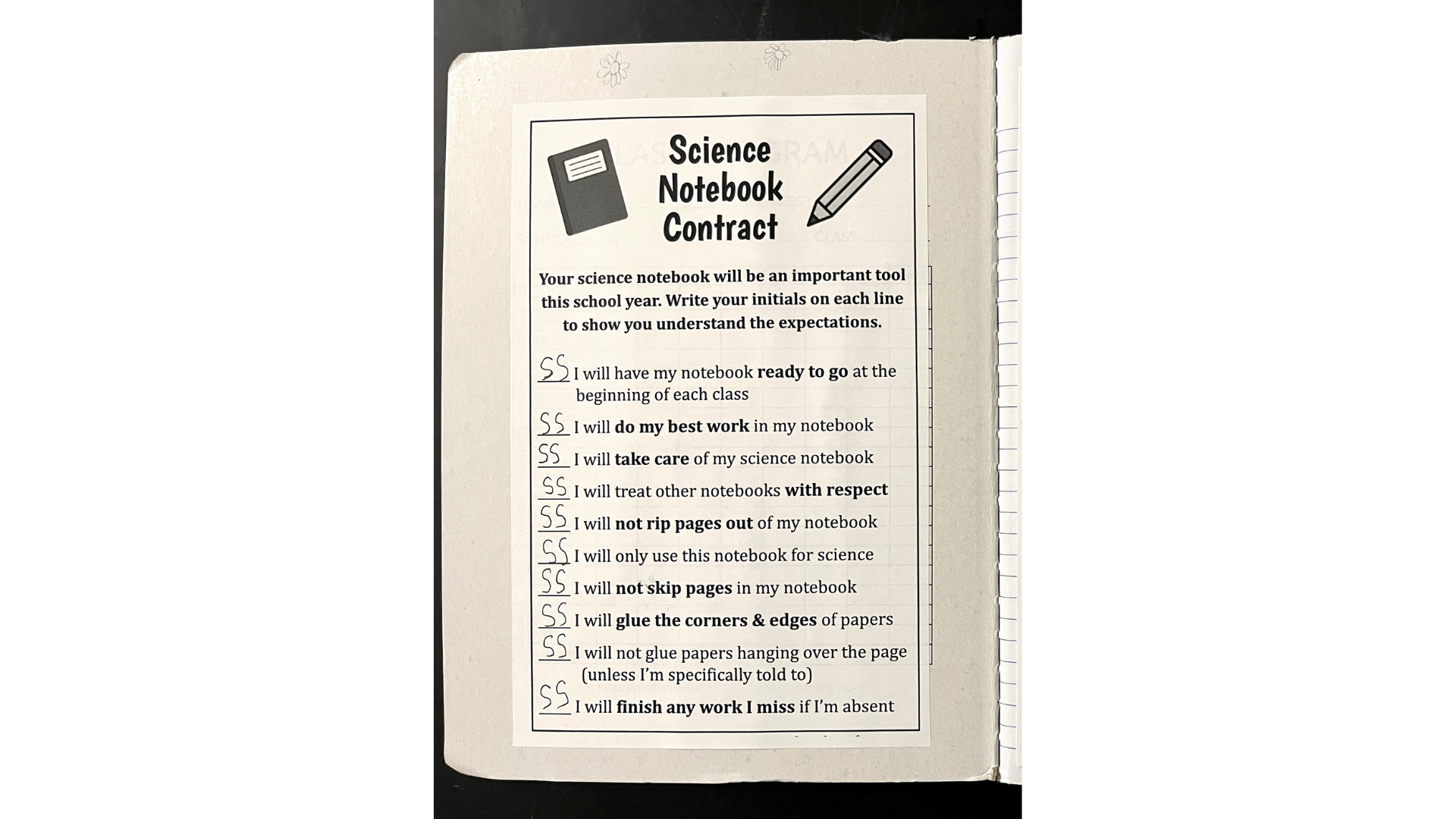
On one of the first days of school, we go over the Notebook Contract. It gets glued to the inside front cover of their notebook. I bought a set of fancy quill-type pens on Amazon, which get students excited about writing their initials next to each line to show they understand the expectation. I also pair the contract with a lesson on why notebooks matter, and how real scientists use notebooks to organize their thinking.
During the Notebook Contract, I really emphasize the importance of not ripping pages out of their composition notebooks. They’re so tempted to if they make a mistake, but doing so can make whichever sheet that page is sewn to fall out. I’ve developed some strategies for helping students deal with mistakes. If they glue a paper onto the wrong sheet, sometimes they can peel the page off and relocate it without it ripping. If it does seem like it’s going to rip, you can either just glue a blank one on to the correct spot, and glue a future page on top of the mistake page. If a student accidentally skips a page or two and the papers can’t be easily moved, I just glue those two sheets together and renumber the rest.
How I Grade Them
Notebook Checks don’t need to take forever! There are many ways to do this. What works best for me is that I check them every 2-3ish weeks. It takes me about 25ish minutes to grade a class of 25 kids. I always grade them during class – I don’t need any additional work to do after school! Sometimes I’ll play a longer video (20-30+ minutes) and have all the students open their notebooks to a certain page and place them on a table in the back of the room, and I’ll grade them while they watch the video. Sometimes I’ll have them do a review activity at their desks, have them open their notebooks to a certain page, and I’ll come around and check them at their seats. I make each page 1 point. If they have all 10 pages, they get 10 points. Only half of one page done? Half a point. I put a check mark in the top corner of the last page that was graded if they had 100% of the work, or write the score if it was less than 100% (e.g. 9/10). I mostly just check for completion/effort, since most activities that rely on accuracy we go over during class.
What About Absent Students?
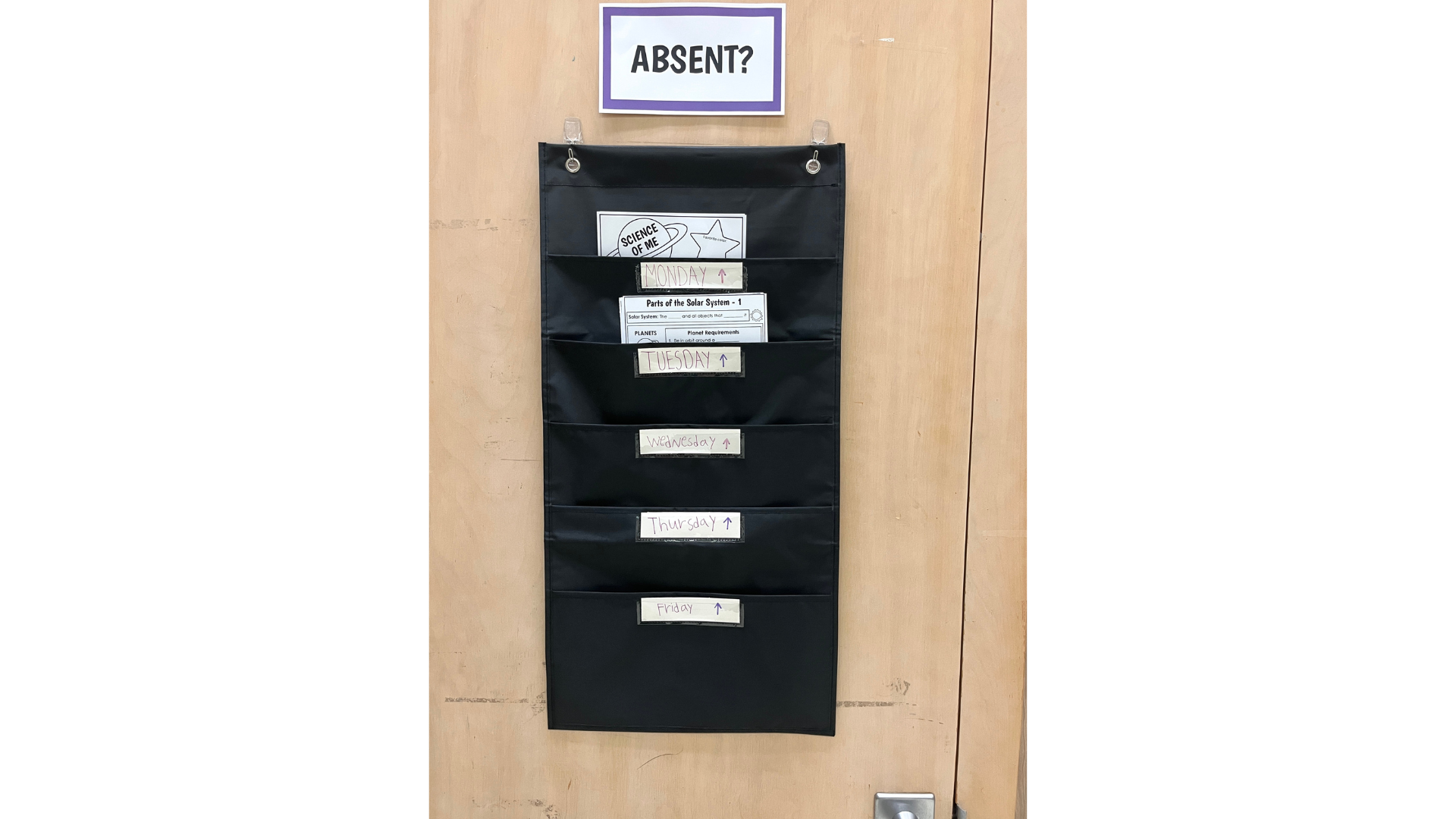
This is the part I still struggle with the most! I tried something new last year: I hung a five-pocket organizer on the wall, with each pocket labeled with a day of the week. At the end of each day, I put the leftover notebook pages in the spot for that day. When a student returns from an absence, they can grab the papers from the folder for the day(s) they missed. All of the lesson slideshows and digital resources we use are posted to Google Classroom. The expectation is that students who were absent go through the slideshows and use them to complete their missing notebook work. If they miss a major activity, I try and arrange for them to stay in during lunch/recess to make it up.
Why Notebooks?
Keeping all of my students' work in one place has made my classroom much more manageable. I spend less time collecting and organizing papers, and students always know where to look when they need notes, practice, or previous activities. Overall, it helps my classroom run more smoothly.
If you're thinking about using science notebooks, I hope some of these ideas help you build a system that works for your classroom.
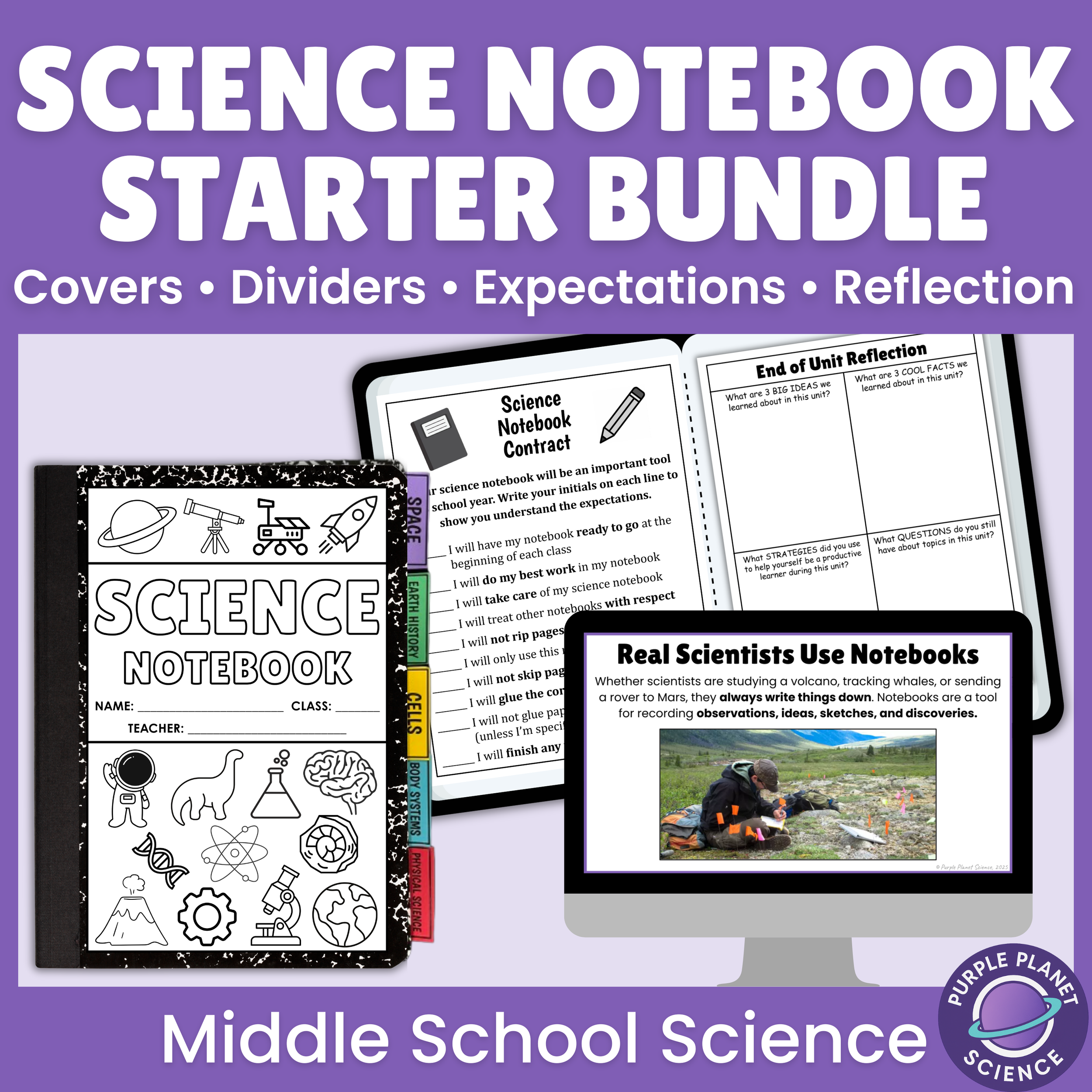
Want my whole notebook system in one place? Check out my Science Notebook Starter Bundle.